TDEE Calculator (Daily Calorie Needs)
Total Daily Energy Expenditure
Want to know how many calories you burn per day? Use this free TDEE calculator to estimate your daily calorie needs based on your age, gender, weight, height, and activity level. This helps you understand how many calories you need to maintain, lose, or gain weight — using science-backed formulas.
About This TDEE Calculator
This TDEE Calculator helps you estimate your daily calorie needs using the science-backed Mifflin-St Jeor equation, one of the most accurate metabolic formulas used by nutritionists and trainers. Your TDEE (Total Daily Energy Expenditure)tells you how many calories your body burns per day based on your weight, height, age, gender, and activity level.
Once you know your TDEE, it's easier to set realistic goals: eat below TDEE to lose weight, match TDEE to maintain, or eat a surplus to build muscle.
Planning to break your calories into macros? Try our Macro Split Calculator to generate a protein, carb, and fat breakdown from your TDEE.
Frequently Asked Questions
What is the difference between BMR and TDEE?
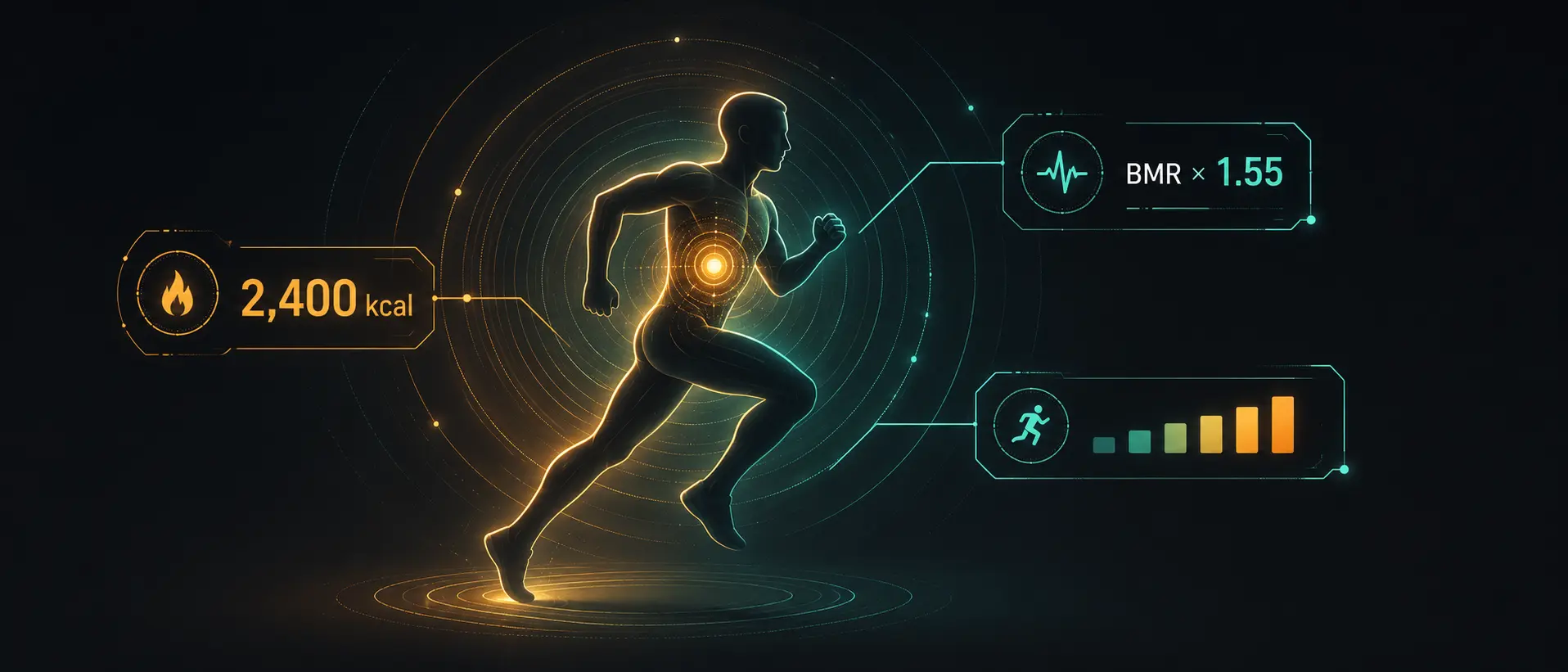
BMR (Basal Metabolic Rate) is the number of calories your body burns at rest — just to stay alive.TDEE is your BMR multiplied by your activity level, giving you a better estimate of how many calories you burn on an average day.
How many calories do I need to lose weight?
A common fat loss strategy is to eat around 15–20% below your TDEE. For example, if your TDEE is 2,400 calories, a calorie deficit target might be1,900–2,000 calories per day for sustainable weight loss.
How many calories does it take to lose one pound of fat?
Roughly 3,500 calories = 1 pound of body fat. That means a daily deficit of 500 calories per day can lead to around 1 pound of fat loss per week if maintained consistently.
Is TDEE 100% accurate?
TDEE formulas provide a strong estimate, but real-life results may vary based on metabolism, muscle mass, recovery, sleep, and hormone levels. Use your TDEE as a starting point and adjust based on real progress over time.
Last updated:
Powered by HumanCalculations — free online calculators