Creatine Calculator
Estimate your daily creatine monohydrate intake, optional loading phase, container duration, and cost per serving. This creatine calculator uses commonly referenced ranges (3–5 g/day maintenance, ~0.3 g/kg/day for loading) to give you a clear plan based on your bodyweight, goal, and product details.
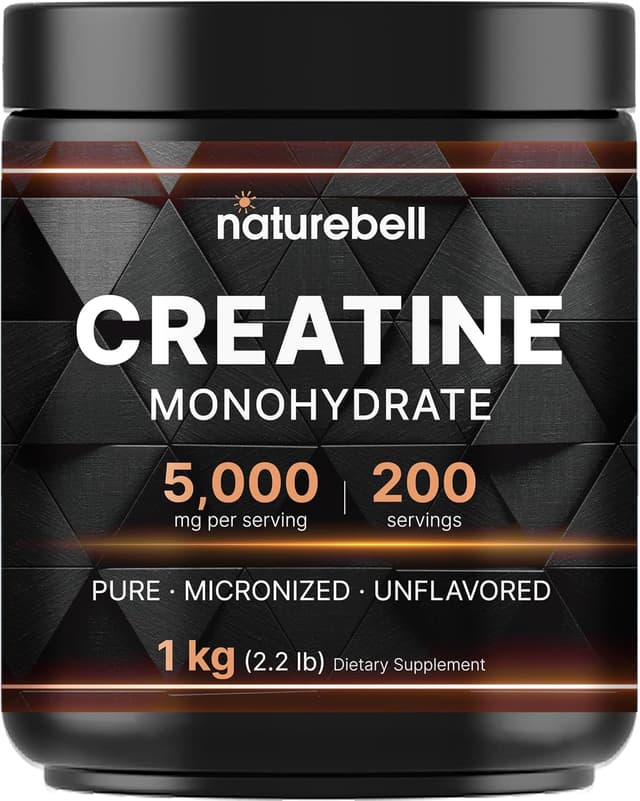
Best Value Creatine (What I Personally Use)
Personally, I take 1 scoop (5 g) every morning with water, and another 5 g pre-workout. This isn't medical advice — just what I do. After trying different options, this has been the best bang-for-the-buck and one of the cheapest options I've found.
Recommended
Creatine Monohydrate Powder
- Micronized creatine monohydrate (mixes cleanly in water)
- Unflavored — easy to stack with a shake or juice
- Large tub size keeps cost per serving low
- Single ingredient: just creatine monohydrate
As an Amazon Associate I earn from qualifying purchases.
How This Creatine Calculator Works
Creatine monohydrate is one of the most studied dietary supplements in sports science. It works by helping your muscles regenerate adenosine triphosphate (ATP), the molecule your body uses for short, high-output movements like sprints, jumps, and heavy lifts. The math behind a creatine plan isn’t complicated — it’s basically two questions: (1) how much do I take per day, and (2) how long does a tub last me?
Loading vs. Maintenance — A Practical Explanation
There are two commonly referenced ways to start creatine, and both land you in the same place: a fully saturated muscle creatine pool. The difference is just how fast you get there.
- Maintenance only. Take roughly 3–5 grams every day. Your muscles reach saturation in about 3–4 weeks. This is the simplest approach and the one most people stick with long-term.
- Loading + maintenance. Take about 0.3 g per kg of bodyweight per day (often referenced as 20 g/day, split into four 5 g servings) for 5–7 days, then drop to 3–5 g/day. You saturate in about a week instead of a month. Some people get mild stomach discomfort during this phase — splitting the dose helps.
Loading isn’t required. It’s an option for people who want results faster (e.g., before a training block). If you’re unsure, the maintenance-only path is the conservative default this calculator suggests.
The Bodyweight-Based Math
The dose this calculator suggests is based on the commonly referenced figure of ~0.03 g/kg/day, normalized into the standard 3–5 g/day range. That means a 60 kg person and a 110 kg person both end up roughly in that band — heavier people have more muscle mass to saturate, but the dose tops out at the high end of the everyday range. There’s no benefit to taking more than 5 g/day for maintenance once your muscle stores are saturated.
For loading, the same logic applies but at 10× the dose: roughly 0.3 g/kg/day for 5–7 days, split into multiple smaller servings. Your training frequency (3–4 days/week) doesn’t change the dose itself — creatine works by keeping your muscles saturated, which means you take it on rest days too.
Cost Per Gram: The Only Number That Matters
Creatine monohydrate is a commodity supplement. Most reputable brands sell roughly the same powder. The honest way to compare two products is cost per gram, which this calculator computes for you when you enter container size and price. As a rough guide:
- $0.03–$0.05 / gram is genuinely good value.
- $0.06–$0.08 / gram is typical retail pricing.
- $0.10+ / gram usually reflects branding, flavors, or marketing — not better creatine.
A 500 g tub at $25 works out to $0.05/g, or about $7.50/month at 5 g/day. A 60-serving flavored stick pack at $30 might be $0.20/g — four times more expensive for the same molecule.
When You’ll Run Out
Once you know your daily dose and your container size, container duration is just division. A 500 g container at 5 g/day lasts 100 days. The plan-for field above lets you flip it the other way: enter how many days you want to plan for, and the calculator tells you how many grams (and how many containers) you’ll need. Useful for budgeting, road trips, or stocking up during a sale.
Related Calculators
Creatine pairs naturally with other nutrition and training calculators:
- Pair this with our Protein Calculator to estimate your daily protein target alongside your supplement plan.
- Use the Macro Calculator to split daily calories into protein, carbs, and fats.
- See your TDEE and BMR to set a calorie target.
- Check hydration needs — creatine pulls some water into muscle cells, so staying hydrated is worth keeping an eye on.
Frequently Asked Questions
How much creatine should I take per day?
The most commonly referenced maintenance dose is 3–5 grams per day, taken every day (training and rest days). Some heavier individuals use up to 5 g; the calculator nudges you within that band based on bodyweight.
Do I need to do a loading phase?
No — loading is optional. It saturates your muscles faster (about a week instead of a month), but skipping it and just taking 3–5 g/day reaches the same end state. Choose whichever fits your preferences.
When is the best time to take creatine?
Daily consistency matters far more than timing. Morning, with meals, or around training all work — pick the one you’ll actually remember. Mix it with water, juice, or a protein shake.
Should I cycle creatine?
There’s no widely accepted requirement to cycle creatine monohydrate. Many people take it continuously for years. If you stop, your muscle creatine stores gradually return to baseline over a few weeks.
Which form of creatine is best?
Plain creatine monohydrate is the most studied and typically the cheapest per gram. Other forms (HCl, ethyl ester, buffered) are often marketed as superior but the evidence supporting that is limited.
How do I compare two creatine products?
Divide the price by the total grams in the container to get cost per gram. Multiply by 5 to get cost per typical 5 g serving. This calculator does it for you when you enter both fields above.
Is creatine safe?
Creatine monohydrate has been studied extensively in healthy adults at the doses described above. As with any supplement, talk to a qualified healthcare professional before starting, especially if you have a kidney condition, are pregnant or nursing, or are taking medication.
Frequently Asked Questions
- How much creatine should I take per day?
- The most commonly referenced maintenance dose is 3–5 grams per day, taken every day (training and rest days). Heavier individuals often use closer to 5 g; the calculator nudges you within that band based on bodyweight (~0.03 g/kg/day, capped at 5 g).
- Do I need to do a loading phase?
- No — loading is optional. About 0.3 g/kg/day (often referenced as 20 g/day, split into four 5 g servings) for 5–7 days saturates muscle stores faster. Skipping it and just taking 3–5 g/day reaches the same end state in 3–4 weeks.
- When is the best time to take creatine?
- Daily consistency matters far more than timing. Morning, with meals, or around training all work — pick the option you'll actually remember. Mix with water, juice, or a protein shake.
- How do I compare creatine product prices?
- Divide the container price by total grams to get cost per gram. Multiply by 5 to get cost per typical 5 g serving. Most plain creatine monohydrate falls between $0.03 and $0.10 per gram.
- Which form of creatine is best?
- Plain creatine monohydrate is the most studied form and typically the cheapest per gram. Other forms (HCl, ethyl ester, buffered) are often marketed as superior, but the supporting evidence is limited.
- Should I cycle creatine?
- There's no widely accepted requirement to cycle creatine monohydrate. Many people take it continuously for years. If you stop, muscle creatine stores gradually return to baseline over a few weeks.
Powered by HumanCalculations — free online calculators